The Rise of the Machines: Revolutionizing Metal Manufacturers with Robot Welding
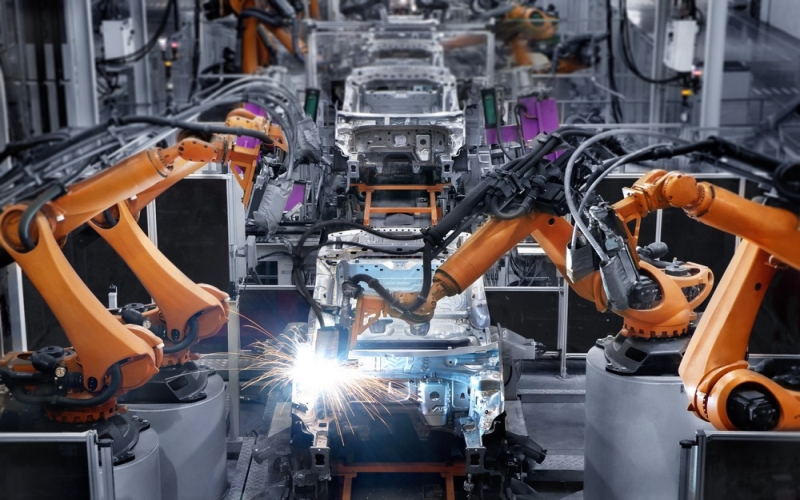
Iron and steel products are used in virtually every sector of economic activity ranging from the construction and automotive industries to medical facilities and home appliances. Welding plays an important role in the fabrication of metal products and its efficiency and accuracy play a very significant role in the quality and reliability of the metal manufacturers products to be produced. It is at this juncture that robot welding has come in as a valued innovation.
This blog is on robot welding for the metal manufacturing industry and the benefits that come with it as well as the indispensable role of the human worker in the process. Although we are not going to talk about how one could locate the robot welding services, we will focus on how the welding technology can be employed optimally.
Beyond Human Limits: Precision, Speed, Consistency
Conventional welding processes include the so-called manual welding operations performed by the workmen. But, in the case of robot welding, there are certain marked benefits. Robots are capable of perfectly welding the joints without the common errors that would be repetitive when many items are manufactured at the same time hence the quality of welds will be constant.
Moreover, robots can work at a much higher speed than human welders can work while doing the same job. This would then mean that there would be higher output and productivity within the manufacturing of metals. Furthermore, robots take time and recurrent risky welding processes from workers, thus ensuring their safety.
The Human Touch: Programming, Supervision, and Quality Control
Robots are good at position and repetitive welding but for suitable implementation of robot welding, human expertise is still crucial. Skilled technicians input parameters into the robots to ensure that the robots make welds according to the required standards.
Thus, supervision by people is necessary at every stage of welding. It is the responsibility of the workers to oversee the robots, to assess for glaring problems, and to check the quality of the welds being created. It is a symbiosis of humans and robots where every participant makes the most of their capabilities regarding the welding process.
A Flexible Workforce: Symbiosis-A Human and Robots
With the inclusion of robot welding it does not mean that human welders inmetal manufacturers industries are out of the job. Instead, it results in a more fluid or possibly more ‘liquid’ workforce, whereby employees move from one organization to another in a more fluid manner than was possibly the case in the past. Many welders who have trained and worked with robots can easily advance their skills and explore numerous programs in programming, robot maintenance, and robotics supervising.
Beyond the Welding Arc: Embracing a Future of Collaboration
Robot welding is a great enhancement to the metal manufacturers from traditional methods.
In the future, as the technology in the wielding of robots progresses, there are likely to be advanced and complex robots for the job. But still, the decision-making human component will remain essential and can’t be substituted.
That is why the future of metal manufacturing is to have human-robot symbiosis as human-robot teamwork will remain the key for so definite future. What makes LSPM attractive to manufacturers is the possibility to get the best of the best: the combined advantages of industrial production and machine precision.