Why Horseback Riding Is One of the Best Ways to Experience Nature
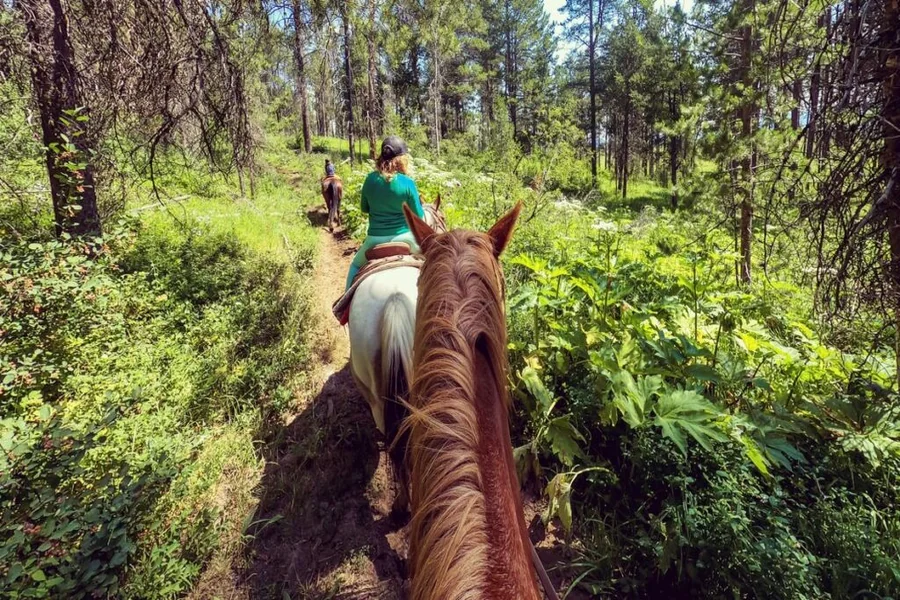
Horseback riding and nature have a relationship that goes back further than recorded history. Long before it became a recreational activity, riding was simply how humans moved through the world — across plains, through forests, over mountain passes. That history matters, because it means the pairing of horse and landscape isn’t a modern invention. It’s something closer to the original design.
What’s changed is why people do it. For most riders today, horseback riding is about the experience — and specifically, about experiencing natural environments in a way that no other outdoor activity quite replicates. Not hiking, not cycling, not even the most meditative of nature walks produces quite the same combination of pace, presence, and connection to the land that riding does. This piece explores why, and what that actually looks like in practice.
The Pace of Horseback Riding Is the Point
Speed is overrated in nature. Most people would say they want to slow down, take in the details, actually see the environment they’re moving through. The problem is that most outdoor activities make this harder than it should be. Hiking at a brisk pace puts you in your legs. Cycling demands attention to the road. Running is moving too fast to observe much at all.
A horse at a walk covers about four miles per hour — close to a human walking pace, but with a crucial difference: you’re not expending energy to maintain it. That frees up attention. When you’re not thinking about your breathing or your stride, the landscape becomes the primary input. You notice the way light changes through a tree canopy, the sound of a creek before you can see it, the particular quality of silence in a canyon at midday. These are details that faster activities blur past and foot traffic often obscures with effort.
There’s also the question of range. A two-hour ride covers eight to ten miles of terrain. A comfortable hiker might cover the same distance, but not with the same ease, and not on the same kinds of terrain. Horses handle slopes, loose rock, and creek crossings that would slow a hiker considerably — giving you access to viewpoints and landscapes that are technically reachable on foot but rarely reached that way.
What Horses Add to the Nature Experience
The horse isn’t just transportation. That’s the thing most people who haven’t ridden much don’t fully grasp before they try it. The animal is a presence — responsive, alive, constantly processing the environment through senses sharper than yours. Horses hear frequencies humans can’t. Their peripheral vision covers nearly 360 degrees. They detect changes in terrain and atmosphere that their riders don’t notice until an ear swivels or the pace shifts slightly.
Riding alongside that kind of awareness changes how you experience the environment. You start paying attention to what the horse is paying attention to. A slight hesitation at a ridge edge might mean wind from a direction you hadn’t registered. An alert posture heading into brush might indicate deer you wouldn’t have spotted. It’s a form of augmented perception — your senses combined with those of an animal that evolved for exactly this kind of environmental reading.
The physical connection matters too. The horse’s warmth comes through your legs. Its breathing is audible. The rhythm of its movement is felt in your spine. You’re part of the ecosystem in a more literal way — moving through it at animal speed, with animal awareness beside you.
The Science Behind Why Horseback Riding Feels Restorative
The psychological literature on nature exposure has expanded substantially over the past two decades. Rachel and Stephen Kaplan at the University of Michigan developed Attention Restoration Theory in the 1980s, identifying natural environments as uniquely capable of restoring directed attention — the focused cognitive effort that depletes through work and screen time. Their framework centers on “soft fascination”: effortless, low-stakes attention that allows the mind to recover.
Horseback riding produces this state reliably. The sensory environment of a natural trail engages soft fascination continuously. The horse’s movement creates rhythmic physical input that psychologists associate with parasympathetic nervous system activation — the biological counterpart to the stress response. A 2015 study in the Journal of Equine Veterinary Science documented measurable cortisol reductions following equine interaction, and other research suggests riding produces stronger effects than ground-based horse activities, likely because movement, outdoor exposure, and animal presence work together.
Most regular riders describe the same thing without knowing the research: that an hour on a horse in open country produces a mental reset they struggle to achieve through other means. It’s not relaxation exactly. It’s more like having been genuinely elsewhere in a way that screens and exercise equipment don’t provide.
Horseback Riding as a Way to Access Wilderness
One underappreciated argument for horseback riding as a nature experience is access. National forests, wilderness areas, and backcountry trail systems across the United States permit equestrian use on routes that ban mountain bikes and limit vehicle access. In some cases, horses are the most practical way to reach certain landscapes without a multi-day backpacking commitment.
In Southern California specifically, the trail network accessible on horseback is extensive and largely uncrowded. The Cleveland National Forest covers roughly 460,000 acres across three ranger districts in San Diego, Riverside, and Orange counties, with hundreds of miles of equestrian-permitted trail. The San Dieguito River Park and the coastal sage scrub canyons of north San Diego County offer terrain that feels remote despite sitting within an hour of downtown.
For anyone exploring horse riding San Diego, the geographic variety is one of the genuine advantages of the region: coastal chaparral, oak woodland, and backcountry desert within a single county, accessible across multiple seasons. Spring wildflower blooms in the foothills, green rolling hills after winter rains, clear high-desert air in fall.
What Horseback Riding Teaches You About an Ecosystem
Horseback riding is one of the better ways to develop genuine literacy about a natural landscape — not because it provides information, but because of how it orients attention.
On a horse, you’re above the ground but connected to it. You feel elevation changes invisible from a car. You notice drainage patterns — where water runs, where soil moisture shifts the vegetation. You observe wildlife behavior that disappears at the sound of an engine. Elk, deer, and birds of prey often tolerate horses at closer range than they tolerate humans on foot, a phenomenon researchers attribute to the prey animal silhouette a horse-and-rider presents. From a distance, it doesn’t register as a predator.
Regular riders develop detailed spatial knowledge of the trails they frequent — not just the route, but the ecology around it. Where the hawks nest. Which sections flood in February. Where the coyotes den. This accrues naturally. The pace and orientation are simply right for it.
How to Start: What a First Ride Actually Looks Like
The gap between “I’d like to try horseback riding” and actually doing it is mostly logistical. Most people who finally book a first ride report wishing they’d done it sooner — less intimidating than expected, more immediately rewarding.
A guided trail ride requires no prior experience. Outfitters match riders to horses based on size and comfort level. The orientation is brief: how to sit, how to stop, general steering. The guide handles the rest. What you get is two hours in a natural environment, at the right pace, with an experienced animal doing most of the navigating.
Anyone considering horseback riding near me as a starting point should know that the barrier to entry is genuinely low, and the return on that first two hours is typically high. The enjoyment doesn’t require skill — it’s available on the first ride, before you’ve learned much of anything.
What to Expect on the Trail
The first thing most first-time riders notice is the height — five to six feet above the ground changes your visual relationship to the landscape immediately. Then the movement: steady, rhythmic, nothing like what movies suggest. It takes about fifteen minutes for most riders to stop gripping and start looking around, and once that happens, the ride tends to take over on its own terms. Closed-toe shoes with a heel, long pants, and sun protection are the practical essentials. Most outfitters provide helmets.
Why Horseback Riding Stays With You
The memory of a good ride tends to be vivid and durable. Experiences that engage multiple senses simultaneously encode more strongly in episodic memory than single-channel experiences. A horseback ride through varied terrain is nearly maximally multisensory: hooves on different surfaces, the smell of chaparral or pine, the warmth of sun and horse together, a landscape seen from height at a moving pace.
This is part of why people who try horseback riding once often find themselves thinking about it afterward and eventually returning. The ride lingers. It becomes a reference point for a quality of presence that’s hard to locate in daily life.
Horseback riding is one of the best ways to experience nature because it asks something of you — attention, presence, a willingness to be carried — and returns an encounter with the natural world that nothing else quite replicates. The horse is the differentiator. There is no substitute, and no equivalent in any other outdoor pursuit.