How to Add Soul to a Minimalist Home Without Creating Clutter

Minimalism, in its purest form, has always been about restraint and selectivity: the serenity that comes from simplicity, the harmony of open space, and the quiet beauty of the essentials. Yet, recently, a new question has emerged: how can we infuse this calm aesthetic with warmth and character, without betraying its essence?
Minimalism is not meant to be sterile. Its best examples, from a Kyoto tea house to a Danish apartment bathed in northern light, pulse with life because they reflect their inhabitants’ rhythms, rituals, and sensibilities. The challenge today is to rediscover that balance: to create a space that feels both pared-back and profoundly personal.
The Shift From Pure Minimalism to Warm Minimalism
Once associated with crisp white walls, stainless steel kitchens, and near-empty living rooms, minimalism has evolved. The new wave, sometimes called “warm minimalism”, replaces austerity with emotion. It embraces texture, patina, and imperfection as essential to a room’s soul.
This evolution mirrors a cultural shift. After years of hyper-curated interiors and relentless decluttering, people have begun to crave homes that feel human again. They want calmness but also comfort and cozyness, the kind that comes from spaces that tell stories. The goal is no longer to erase the self from the environment, but to distill it.
The modern minimalist home is no longer about strict reduction; it’s about editing with empathy. Every surface, every object, every shaft of light contributes to an atmosphere that’s intentional yet inviting.
The Power of Material Honesty
The first step toward soulful minimalism lies in the materials. The tactile reality of wood, linen, stone, and clay adds a dimension that pure white walls and synthetic finishes can never match. When you walk barefoot on oiled oak floors or run your fingers along a hand-thrown ceramic vase, the space speaks to you.
Material honesty, the idea that each surface should express its true nature, grounds the minimalist interior. Unpolished marble, exposed brick, or limewashed plaster absorb and reflect light in ways that animate a room. Even a single organic element can shift the atmosphere from sterile to sensuous.
In the kitchen, a simple wooden cutting board left on display or a ceramic bowl of lemons can provide a visual heartbeat. In the bathroom, the rough texture of natural stone against smooth porcelain creates a tactile dialogue. Such contrasts are subtle but powerful: they remind us that beauty isn’t about perfection, but presence.
Art as a Reflection of the Self
Nothing injects individuality into a minimalist interior quite like art. But in a setting where negative space is part of the composition, choosing art requires intuition. Oversized pieces can anchor a room, while small, delicate works can invite intimacy.
A large abstract canvas in muted tones can add visual drama without disturbing calm. A photographic print might echo the geometry of the room, or contrast with it to create subtle tension. Even a single sculptural piece on a plinth can shift the entire atmosphere.
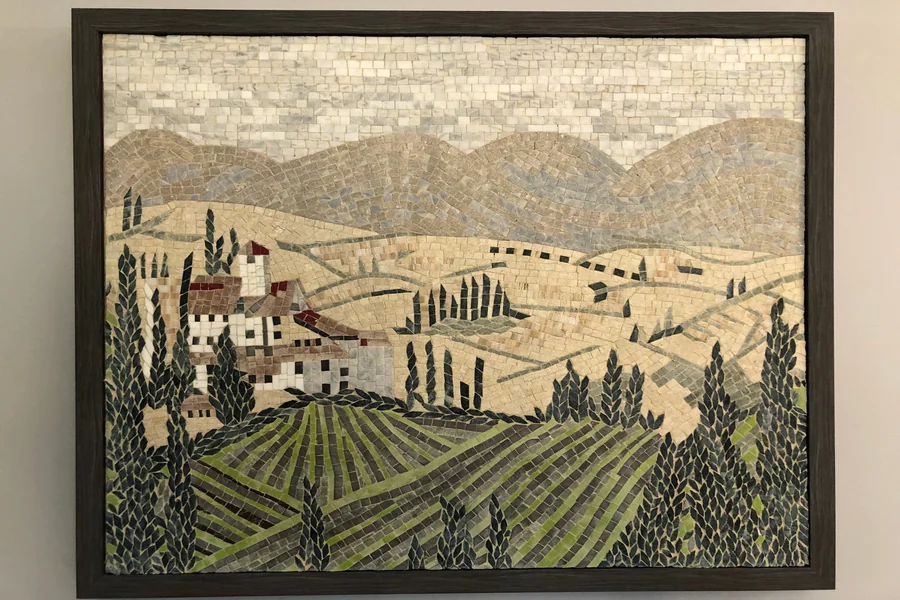
For those who crave a touch of texture and craftsmanship, mosaic wall art is currently a contemporary favorite. The intricate interplay of color and material captures the eye but respects minimalism’s emphasis on structure and simplicity. It serves as a tactile focal point, a proof that detail and restraint can coexist beautifully.
Texture as the New Ornament
If clutter is the enemy of minimalism, texture is its secret weapon. When ornamentation is stripped away, surface quality takes on new importance. A monochrome palette can be made infinitely rich by layering rough and smooth, matte and gloss, hard and soft.
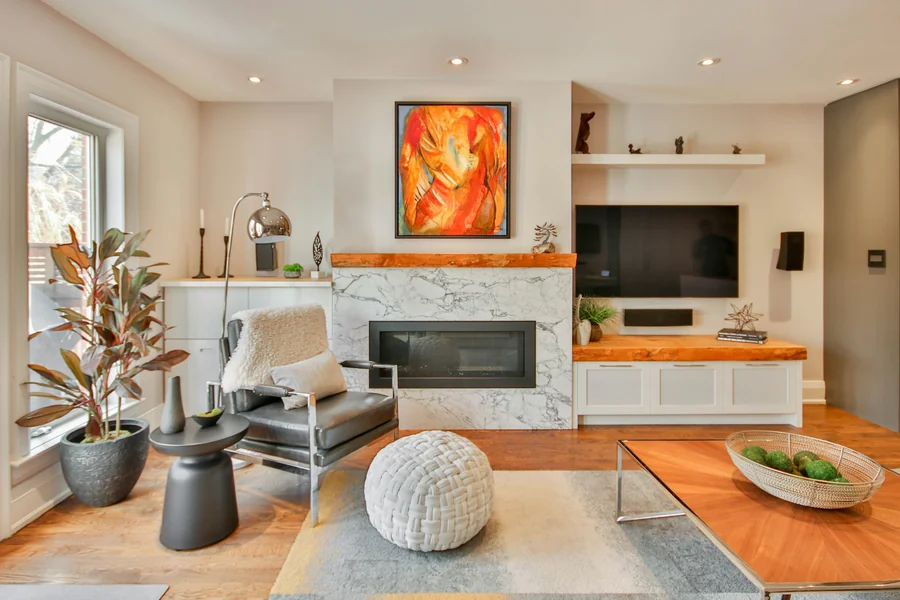
Imagine a living room where linen drapes pool lightly on the floor, a wool rug softens a concrete surface, and a single leather chair sits beside a cool glass table. Each material interacts with the others, creating depth and tactility without visual noise.
This approach works especially well with natural light. As daylight shifts through the day, textured materials respond differently: shadows deepen, highlights flicker, and the look of the room changes. What might appear minimal in design becomes dynamic in experience.
Texture engages the senses in ways color or ornament often cannot. It invites touch, slows the gaze, and makes us aware of the material world around us, a quiet antidote to the digital overstimulation of modern life.
Color, But Softly
Minimalism doesn’t have to mean monochrome. The palette of a soulful minimalist home often borrows from nature hues that change gently with the light and don’t overstimulate our eyesight.
Color can also be introduced in measured doses: a single ochre vase on a white shelf, the muted green of eucalyptus leaves in a glass jar, the indigo of a linen throw across a pale sofa. The key is to treat color as a way to set up atmosphere rather than simple decoration.
The Poetry of Light
Few elements can transform a minimalist home as profoundly as light. Without the distraction of excessive objects, light becomes the main sculptor of mood. It glides across walls, defines geometry, and alters perception from morning to night.
Natural light, in particular, brings life into minimal spaces. Sheer curtains allow it to diffuse softly, eliminating harsh contrast and creating a sense of continuity. Artificial lighting should follow the same philosophy: warm, indirect, and layered.
A well-placed floor lamp beside a reading chair, a pendant over a dining table, a candle flickering on a sideboard: these subtle illuminations create zones of intimacy and rhythm. They let you inhabit different emotional landscapes without rearranging a single object.
Lighting, when handled with restraint, can make even the simplest room feel transcendent.
Curating Instead of Decorating
Minimalist interiors thrive not on abundance but on intention. The objects you choose to display should carry meaning, not because they’re expensive or fashionable, but because they hold a fragment of your story.
This is where minimalism becomes personal. A stack of well-loved books, a photograph from a formative trip, or a handmade bowl from a local artist can say more about you than an entire shelf of decorative accessories.
Curation is an act of storytelling. The art lies in restraint: allowing a few chosen items to breathe, so their presence feels deliberate rather than decorative. This approach transforms the minimalist space into a portrait of its owner and immediately makes it feel like a lived-in, warm home.
The Presence of Nature
Minimalism, at its best, mirrors nature’s clarity. Introducing natural elements not only softens the geometry of a minimalist space but also reconnects it to the rhythms of the world outside.
Plants, even in modest numbers, can transform a room. A single fig tree in a corner or a few sprigs of olive in a ceramic vase can create a sense of vitality. The key is simplicity: choose species with sculptural silhouettes, and give them space to breathe.
Natural objects, such as stones, driftwood, shells, or dried branches, can also play a role. Their organic shapes and imperfections remind us of impermanence, of time’s gentle passage. They bring a sense of narrative to spaces that might otherwise feel static.
Incorporating natural textures through flooring or finishes: for example, polished concrete alongside mosaic tiles in muted tones adds subtle visual rhythm.
Embracing Imperfection
Perfect minimalism can feel sterile because life is rarely perfect. A soulful home welcomes patina and imperfection: the uneven grain of wood, the hairline crack in a ceramic cup, the faded corner of a linen cushion. These traces of time add depth and authenticity.
The Japanese philosophy of wabi-sabi captures this sensibility: beauty found in impermanence and imperfection. Applied to minimalism, it encourages us to see wear and age as virtues, not flaws. A scuffed floor tells a story. A repaired vase becomes an emblem of care
By accepting imperfection, we release the anxiety of constant perfectionism, whish is an invisible clutter of its own. What remains is space for living and enjoying.
Scent, Sound, and the Invisible Layers of Home
Soul doesn’t come only from what we see; it also arises from what we feel, smell, and hear. The invisible atmosphere of a home can be as defining as its design.
In minimalist spaces, these sensory details become even more pronounced. The echo of footsteps on wooden floors, the rustle of linen curtains, the quiet hum of a diffuser, each contributes to the emotional resonance of the space.
Natural scents, such as cedar, sage, citrus, or sandalwood, enhance the feeling of calm. Soft textiles and rugs absorb sound, turning rooms into hushed retreats. Even the rhythm of airflow, the way a window opens to invite breeze and birdsong, becomes part of the design language.
To add soul without adding clutter, focus on these invisible layers. They make a minimalist home feel alive, inhabited, and deeply human.