Jacksonville’s Best Bicycle Accident Lawyers in 2026
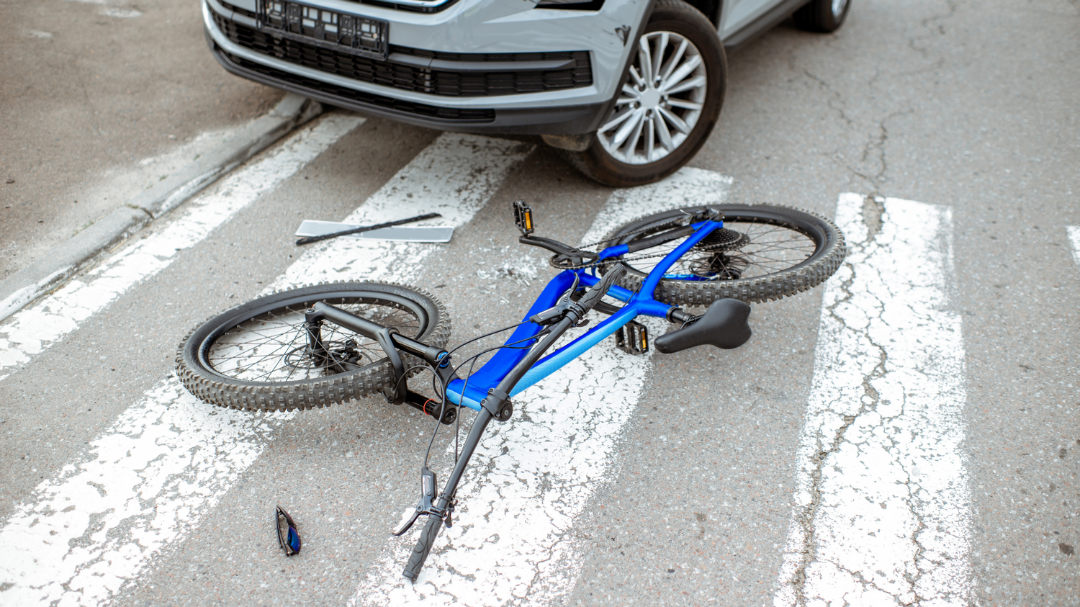
Florida leads the nation in cyclist fatalities per capita, and Jacksonville appears on those rankings year after year. The city’s road network runs on high-speed arterials with limited protected bike infrastructure, and crashes here tend to be high-impact. Since 2023, Florida’s revised fault rules cut off recovery entirely once a cyclist’s share of blame crosses 50%. That single change made choosing the right lawyer more consequential than it has ever been for Jacksonville riders.
The five firms below are credible options for Jacksonville cyclists in 2026. Each works on contingency and offers a free initial consultation. They were selected on cycling-case focus, willingness to litigate, fee transparency, and active Duval County case experience.
Top 5 Jacksonville Bicycle Accident Lawyers to Consider
1. Bicycle Accident Lawyers Group, National Bicycle Accident Attorneys
Bicycle Accident Lawyers Group (bicycleaccidentlawyers.com) is a national bicycle accident law firm representing cyclists injured in collisions with motor vehicles, hazardous roadways, and negligent third parties. Bicycle accident litigation is the firm’s only practice area.
In Jacksonville, BALG handles bicycle collisions along Beach and Atlantic Boulevards, dooring crashes near Riverside and San Marco, hit-and-run cases on Mayport Road and other suburban corridors, and uninsured motorist disputes under Florida’s modified comparative negligence rule. Every case includes evidence work built around how bike crashes happen at the scene level: bike lane design review against FDOT and local standards, sightline reconstruction calibrated to bicycle approach speed and angle, dooring geometry analysis using door-swing arc and cyclist positioning, and helmet-defense rebuttal to counter insurers who try to shift blame onto riders without helmets.
Fee: Contingency. No upfront costs.
2. Coker Law, Jacksonville Trial Counsel
Coker Law has represented Jacksonville-area injury clients for decades. The firm’s value for cyclists is its trial infrastructure. Coker maintains in-house relationships with accident reconstruction engineers and biomechanical experts, which matters in bicycle cases where the insurer disputes how the collision happened.
For a cyclist struck on a high-speed arterial like Beach Boulevard or Roosevelt Boulevard, the central question is often whether the driver had time and space to see the rider. Coker’s reconstruction resources let the firm build that proof from skid marks, vehicle event data, road geometry, and sight-distance calculations rather than relying on the police report alone.
Fee: Contingency. Free consultation.
3. Tassone, Dreicer & Lyon, Duval County Personal Injury Practice
Tassone, Dreicer & Lyon handles personal injury and wrongful death matters across the Jacksonville metro, including bicycle crash cases. Where the firm adds particular value for injured cyclists is in long-term injury documentation.
Bicycle crash injuries often worsen over time. A concussion diagnosed at the ER may develop into persistent post-concussion syndrome weeks later. A shoulder separation that seemed moderate may require surgical intervention after conservative treatment fails. Tassone Dreicer coordinates directly with treating physicians to build a medical record that captures this progression, which prevents insurers from arguing that the cyclist’s current condition is unrelated to the crash.
Fee: Contingency. Free case evaluation.
4. The Law Office of John M. Phillips, Jacksonville Civil and Injury Counsel
John M. Phillips handles personal injury and civil rights cases in Jacksonville, including bicycle accident representation. The firm’s distinguishing quality is aggressive pre-litigation positioning.
Rather than waiting months to file suit, Phillips prepares every cycling case for trial from intake. Preservation letters go out to the driver’s insurer, the vehicle owner, and any commercial entity (delivery company, rideshare platform) on day one. That early pressure matters in Jacksonville bike cases because surveillance footage from nearby businesses and vehicle dashcam data can be overwritten within days if no one demands preservation.
Fee: Contingency. Free consultation.
5. Eric Block Personal Injury Law, Jacksonville Accident Representation
Eric Block Personal Injury Law represents injured clients across Duval and surrounding counties. The firm’s relevant strength for cyclists is its handling of uninsured and underinsured motorist (UM/UIM) coverage disputes.
In Jacksonville, hit-and-run crashes and collisions with uninsured drivers are common, particularly on suburban corridors and beach roads. When the at-fault driver has no insurance or cannot be identified, recovery routes through the cyclist’s own auto policy. Eric Block’s practice includes navigating these first-party insurance claims, where the cyclist’s own insurer becomes the opposing party and often disputes coverage applicability, injury severity, or policy limits.
Fee: Contingency. No upfront costs.
Understanding Florida Bicycle Law and Fault Rules
Cyclists in Florida operate under Florida Statute § 316.2065, which gives riders the same rights and duties as motor vehicle drivers. Riders must obey traffic signals, may take the full lane when conditions require it, and have the right to use any public road except limited-access highways (interstates and expressways). Florida law requires drivers to give cyclists at least three feet of clearance when passing under F.S. § 316.083. Riders under 16 must wear an approved helmet. There is no statewide adult helmet requirement, but insurers routinely raise helmet non-use as a fault argument regardless.
At night, bicycles must carry a front white lamp visible at 500 feet and a rear red reflector or lamp visible at 600 feet. Failing to have proper lighting does not automatically make the cyclist at fault, but it gives the insurer a credible argument to push the fault percentage higher.
The 2023 Fault Rule Change
Florida’s fault rules changed significantly under HB 837, signed in March 2023. Before this law, Florida used pure comparative negligence, meaning a cyclist could recover damages even if found 90% at fault (collecting the remaining 10%). Under the new rule, a cyclist found more than 50% at fault recovers nothing. The same legislation shortened the statute of limitations for negligence claims from four years to two years for crashes occurring on or after March 24, 2023.
This change makes the first 30 days after a crash more important than they used to be. The fault percentage assigned to the cyclist is no longer just a reduction in the check. It is a pass/fail threshold. Witness statements, surveillance footage, road conditions, and the cyclist’s compliance with traffic law all feed into that percentage, and all of that evidence is easiest to collect immediately after the crash.
How Jacksonville Bike Crashes Typically Happen
Most Jacksonville bicycle crashes fall into a small number of patterns.
Beach-corridor strikes. High-speed arterials like Beach Boulevard, Atlantic Boulevard, and Mayport Road carry heavy traffic toward the beach communities. Cyclists riding on shoulders or in shared lanes face high-impact collisions from drivers traveling well above the posted speed limit. The posted limits on these roads are already 45 to 55 mph, and actual travel speeds are often higher.
Intersection conflicts. NHTSA data shows roughly 36% of cyclist fatalities occur at intersections. Right-turning drivers fail to check the bike lane. Left-turning drivers misjudge the cyclist’s approach speed. In Jacksonville, this pattern repeats across Roosevelt Boulevard, San Jose Boulevard, and the corridors feeding the St. Johns River bridges, where merging traffic and limited visibility compound the risk.
Door zone strikes. Cyclists riding next to parallel-parked cars get hit when a driver or passenger opens a door without checking for approaching riders. In Jacksonville, these crashes cluster around Riverside, Avondale, and San Marco, where on-street parking and bicycle traffic overlap on narrow streets.
Impaired driving. Alcohol is a factor in roughly 34% of fatal bicycle crashes nationally per NHTSA. In Jacksonville, this pattern concentrates in the beach communities on weekend nights, where bar traffic and cyclist traffic share the same corridors.
Hit-and-run. The driver leaves the scene. When the driver cannot be identified, the cyclist’s own uninsured/underinsured motorist coverage becomes the primary recovery path. Without that coverage, recovery options narrow significantly.
Common injuries include concussions and traumatic brain injuries (even with helmet use), spinal damage, complex fractures requiring surgical hardware, internal organ injuries, and severe road rash that may require skin grafts and leave permanent scarring.
What Sets a Bicycle-Specialist Lawyer Apart
A general personal injury firm and a cycling-focused firm approach the same crash differently. A generalist treats the case as a standard vehicle collision with standard reconstruction, standard medical documentation, and standard settlement negotiation.
A cycling-focused lawyer works the layer that is specific to how bicycle crashes happen and how insurers defend against them. That includes sightline reconstruction calibrated to bicycle approach angles (a bike approaching at 18 mph creates a different visibility window than a car approaching at 35 mph), dooring geometry analysis that maps door-swing arc against cyclist lane position, bike lane design review where infrastructure defects may shift partial liability to the City of Jacksonville or FDOT, helmet-defense rebuttal supported by biomechanical evidence showing what a helmet would or would not have prevented, and extraction of vehicle event data recorder information to establish the driver’s speed and braking at the moment of impact.
Insurers track which firms litigate cycling cases competently. A firm with a record of taking bike crash cases to verdict gets different settlement offers than a firm that always resolves at first demand.
Choosing the Right Attorney
The free consultation is your interview. Use it to determine whether the firm handles bicycle cases as a regular part of its practice or just lists them on a website.
Ask how many bicycle cases the firm has resolved in the past three years and how many reached trial versus settling. Ask whether the attorney you are speaking with will personally manage your file or hand it to a junior associate. Ask how the firm handles injuries that develop or worsen after the initial diagnosis, since concussions and soft-tissue damage from bike crashes frequently follow that pattern. Ask the contingency percentage at each stage. Most Florida firms charge between 33% and 40%, and the percentage often increases after a lawsuit is filed. Get that number in writing before you sign.
Skip any lawyer who quotes a specific dollar amount before reviewing your medical records. Be skeptical if the attorney cannot explain how Florida’s 50% fault bar applies to your situation or has never handled a UM/UIM claim for a cyclist.