Prince Edward County Is No Longer Ontario’s Best-Kept Secret — And That’s a Good Thing
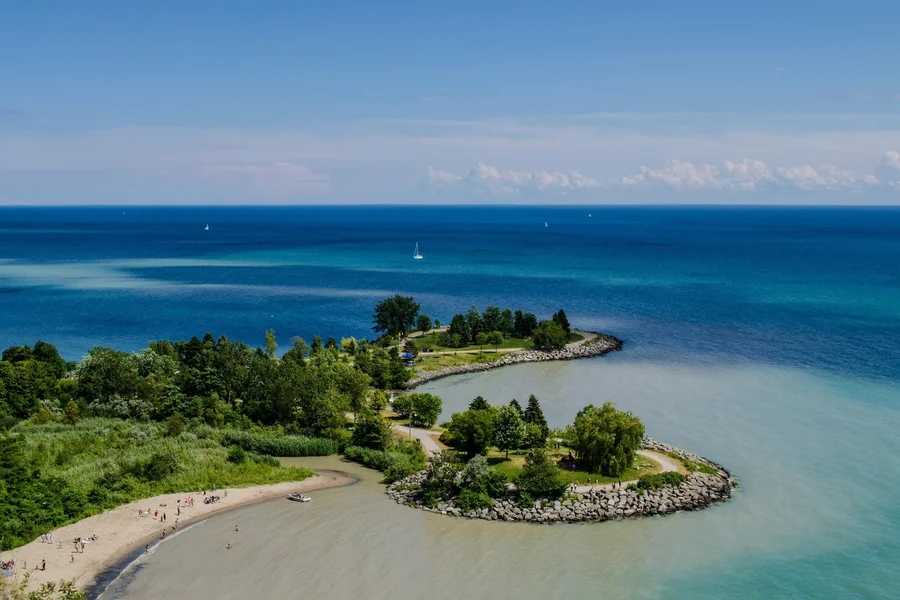
For years, Prince Edward County was the kind of place people whispered about. A hidden gem tucked between Lake Ontario and the Bay of Quinte, known mainly to Torontonians willing to make the two-hour drive for a long weekend of wine, farm-to-table food, and that particular brand of quiet that city life simply cannot manufacture.
But whispers have a way of getting louder.
Today, “the County” as locals and loyalists have always called it, is firmly on the radar of anyone looking for something more than just a vacation destination. It has become a genuine lifestyle conversation, and for a growing number of people, it has become home.
So what exactly is going on in Prince Edward County, and why does it feel like everyone you know is either moving there, talking about moving there, or planning a trip to scope it out?
A Place That Earns Its Reputation
Let’s start with what makes the County so compelling in the first place, because the hype is not manufactured.
Prince Edward County is Ontario’s only island county, a peninsula wrapped in water, farmland, and limestone geography that produces some of the best cool-climate wines in the country. The Hillier wine region alone has attracted world-class winemakers who recognized early that the County’s terroir could produce Chardonnays and Pinot Noirs that genuinely rival international benchmarks.
But wine is just the opening act.
The food scene here punches well above its weight. Restaurants that would be celebrated in any major city have quietly set up shop in small County towns like Picton and Wellington, drawing chefs who are done with the pace of urban kitchens and ready to cook in places that actually inspire them. Add in a thriving artisan food culture, farmers’ markets bursting with local produce, and craft breweries around seemingly every corner, and you have a culinary destination that legitimately earns its reputation.
Then there’s Sandbanks Provincial Park, one of the most stunning freshwater beaches in the entire country, full stop. The kind of place that makes people stop mid-sentence and just stare at the water.
The Shift From Seasonal to Year-Round
Here’s where the story gets interesting.
For decades, Prince Edward County operated on a seasonal rhythm. Summer was electric, with the wineries packed, the restaurants buzzing, and the beach roads lined with cars. Then the last long weekend of summer would arrive, and the County would exhale. Many businesses closed. The population contracted. It went back to being a quiet, beautiful secret.
That’s changing, and changing fast.
The pandemic fundamentally rewired how Canadians think about where they live. Remote work didn’t just give people flexibility; it gave them permission to make choices they had been quietly dreaming about for years. And a significant number of those people chose Prince Edward County.
What followed was a wave of permanent relocations that nobody in the County’s history had quite seen before. Young families. Creative professionals. Entrepreneurs. People in their 40s and 50s who had spent decades building careers in Toronto and decided they were ready to build something different, a life that moved at a pace that actually matched what they wanted from their days.
More businesses started staying open year-round. New ones opened with a year-round model in mind from the start. The community infrastructure, schools, services, healthcare, began adapting to a genuinely growing population rather than a seasonal one.
The County, in other words, grew up.
What Life Actually Looks Like There
It would be easy to romanticize this, so let’s be clear-eyed about what moving to or settling in the County actually means.
The pace is slower, and that is entirely the point. This isn’t a place for people who need the constant stimulation of urban life. If your ideal Saturday involves back-to-back brunch spots and a packed schedule of things to do, the County will require some adjustment.
But if your ideal Saturday looks more like a long morning with good coffee, a drive to a winery by noon, an afternoon at the beach, and a dinner made from ingredients you picked up at a farmstand on the way home? You might find yourself wondering why it took you so long to get here.
The community is tight-knit in a way that city dwellers often underestimate. People know each other. Local events, from harvest festivals to art openings to community markets, carry real weight because the whole town actually shows up. There’s a culture of supporting local that isn’t performative; it’s structural. People here know that the businesses they support are run by their neighbors.
The arts scene is quietly remarkable. Galleries, pottery studios, live music venues, and independent bookshops exist in a concentration here that seems almost improbable for a county with a year-round population of roughly 25,000 people. It has become a magnet for artists and makers who need space, literal and metaphorical, to do their best work.
The Real Estate Reality
None of this has gone unnoticed by the market.
Property values in Prince Edward County have risen substantially over the past several years, and while the feverish pace of the pandemic-era market has cooled somewhat, the County remains a place where informed decisions matter enormously. The mix of heritage homes, converted farmhouses, new builds, waterfront properties, and vineyard estates means the options are genuinely varied, but so are the considerations.
For anyone seriously exploring buying a home in Prince Edward County, working with an experienced brokerage like Harvey Kalles and professionals who truly understand the market, its seasonal quirks, its micro-neighbourhoods, and its hidden value pockets can make a tangible difference. This is not a market where generic advice translates well.
Why People Keep Coming Back, and Then Just Staying
There’s a specific kind of person who visits Prince Edward County once and spends the entire drive home recalculating their life choices.
Maybe it’s the light, that particular golden hour quality the County seems to hold for longer than seems meteorologically possible. Maybe it’s the feeling of arriving somewhere that operates on human scale, where the landscape hasn’t been optimized and the roads still curve with the land rather than cutting through it.
Maybe it’s simpler than that. Maybe it’s that the County offers something increasingly rare: a place where the quality of everyday life, the food, the nature, the community, the pace, is genuinely exceptional, without requiring you to compromise on beauty, culture, or connection to get it.
The secret is out. The County isn’t seasonal anymore.
And for the people who’ve made it home, that’s not a loss of something precious. It’s the whole point.