Why Transparent Lift Design Is Becoming a Statement in Modern Buildings
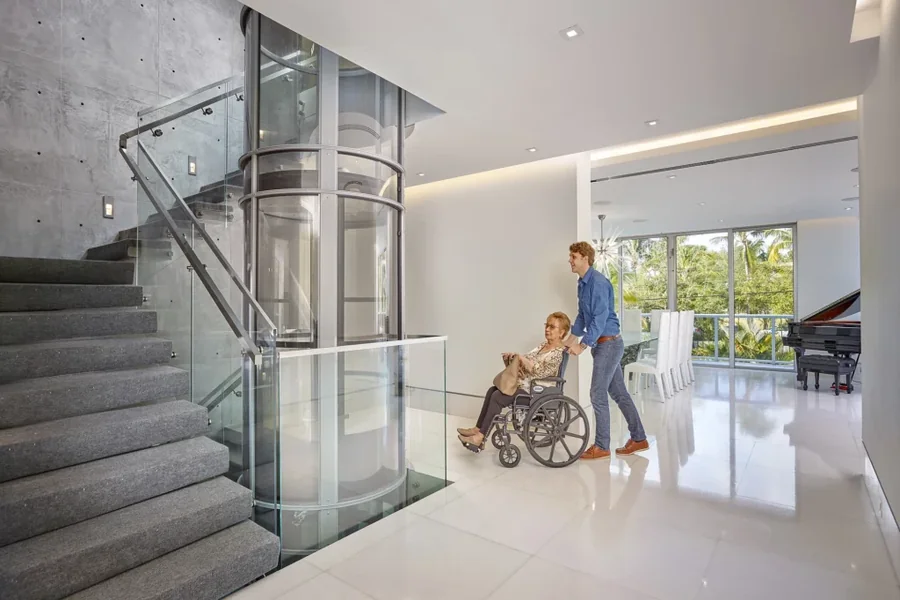
Most lifts are built to disappear. You step in, face the door, watch the numbers, step out, and think about literally anything else. Glass elevators do the opposite. They take something purely functional and give it presence, which is a big part of why glass elevators keep showing up in buildings that want more than a standard vertical transport box tucked behind a wall.
They change the feel of a space almost immediately. A normal lift solves a movement problem. A glass one can open up a foyer, soften a heavy interior, add light, and make the journey itself feel like part of the building rather than a brief interruption inside it.
They make movement visible instead of hiding it
There’s something quietly satisfying about seeing the lift move through the building rather than vanishing into a sealed shaft. It gives the space a bit of life. In larger homes, hotels, offices, retail settings, and public buildings, that visible movement can make the whole place feel more dynamic, almost as though the architecture is doing a little more than simply containing people.
That’s one reason glass lifts often feel more elegant than their conventional counterparts. They don’t cut the vertical travel off from the rest of the environment. They let it stay connected to the building around it.
Light does a lot of the heavy lifting
Traditional lifts can feel a bit closed in, even when they’re perfectly well designed. Glass shifts that mood straight away. Natural light reaches further, interiors feel less boxed up, and the whole structure often reads as lighter and cleaner than a solid enclosed lift ever could.
In buildings that already have strong architectural features, that openness matters. You don’t want a bulky lift installation fighting the rest of the design if it can be helping it instead. A transparent shaft or cabin can sit more comfortably within the space, especially where sightlines, openness, and visual flow are part of the appeal.
They suit buildings that want to make an impression
Some lifts are there to do a job and stay out of the conversation. Others are clearly part of the visual brief.
Glass elevators tend to belong in the second category. They work especially well in spaces where presentation matters, not in a shallow way, but in the sense that the building itself is meant to feel polished, contemporary, and a bit memorable. A foyer, showroom, luxury residence, hotel, medical space, or commercial fitout can all benefit from that kind of feature when it’s handled properly.
The lift stops feeling like a compromise the architect had to squeeze in and starts feeling like part of the design language.
They can make smaller spaces feel less crowded
That sounds counterintuitive at first, because a lift is still a lift and it still takes up room. Visually, though, glass often feels far less imposing than a fully enclosed structure. It allows the eye to travel through the space instead of landing on a solid block.
That can be especially useful in tighter interiors where every element has a big effect on how open or heavy the building feels. A transparent lift can preserve some sense of airiness that might otherwise get lost.
It’s one of those architectural tricks that doesn’t feel like a trick once it’s in place. The space simply feels better resolved.
The appeal isn’t only modern
Glass lifts often get read as very contemporary, and they certainly suit modern buildings well, though they’re not limited to that look. In the right setting, they can also sit beautifully inside more classic or mixed-style architecture, especially where the goal is to add something clean and understated without copying historical details too literally.
That contrast can work really well. Older materials, more traditional finishes, and a modern glass lift can balance each other in a way that feels intentional rather than jarring. The result can be quite refined, particularly when the detailing around the lift has been thought through properly.
People like the experience more than they expect
There’s a user side to all this too. A glass lift simply feels different to ride in.
It’s often more comfortable for people who dislike enclosed spaces, and it can make a short trip feel less blank and mechanical. Instead of stepping into a sealed compartment for ten seconds of fluorescent nothingness, you remain visually connected to the environment around you. In a home or a public building, that can make the lift feel more welcoming and less clinical.
Nobody’s pretending it turns every trip into an event, but it does make the experience more pleasant, and people notice that.
They work best when the detailing is restrained
The strongest glass lift installations usually don’t try too hard. The transparency is already doing enough. Clean framing, sensible finishes, and a structure that fits the architecture around it tend to produce the best result.
Once the design becomes too busy, the effect can tip from elegant to overworked fairly quickly. A glass lift usually looks best when it feels integrated rather than shouted about. Let the openness, light, and movement do the interesting part.
That restraint is often what gives the finished result its confidence.
Function still comes first, obviously
For all the design talk, a lift still has to perform properly. Reliability, safety, accessibility, capacity, and day-to-day usability matter far more than whether something looks impressive from the lobby. The good news is that a lift can do both jobs. It can function well and still add something visually strong to the building.
That combination is what makes glass lifts so appealing. They don’t ask the project to choose between practicality and presence. They can handle the practical brief while improving the way the building feels.
Some building features earn their attention
A lot of design elements get oversold. They’re described as statement features when really they’re just expensive distractions with good lighting. Glass elevators tend to justify the interest a bit more honestly. They solve a real need and improve the look and feel of the space at the same time.
That’s a useful combination. When a necessary feature can also make a building brighter, more open, and more distinctive, it stops feeling like a technical inclusion and starts feeling like a smart architectural move.